⚠️ Affiliate Disclosure: This post is not an affiliate associated review. It may become one in the future and this disclosure will reflect that. This does not affect my reviews and I only recommend tools I genuinely believe in.
Anthropic released Claude Haiku 5.5 on 7 October 2026 — its new smallest model, and the company calls it “the cheapest, fastest, and most capable small model we’ve ever released”. The two numbers that matter: it costs around 75% less to run than Haiku 4.5 on average (Anthropic’s own calculation: 90% cheaper on requests up to 100,000 tokens, 50% cheaper above), and it is the first Haiku with an adjustable effort setting, so the same model can be run cheap or run clever per task.
What Anthropic says Claude Haiku 5.5 can do
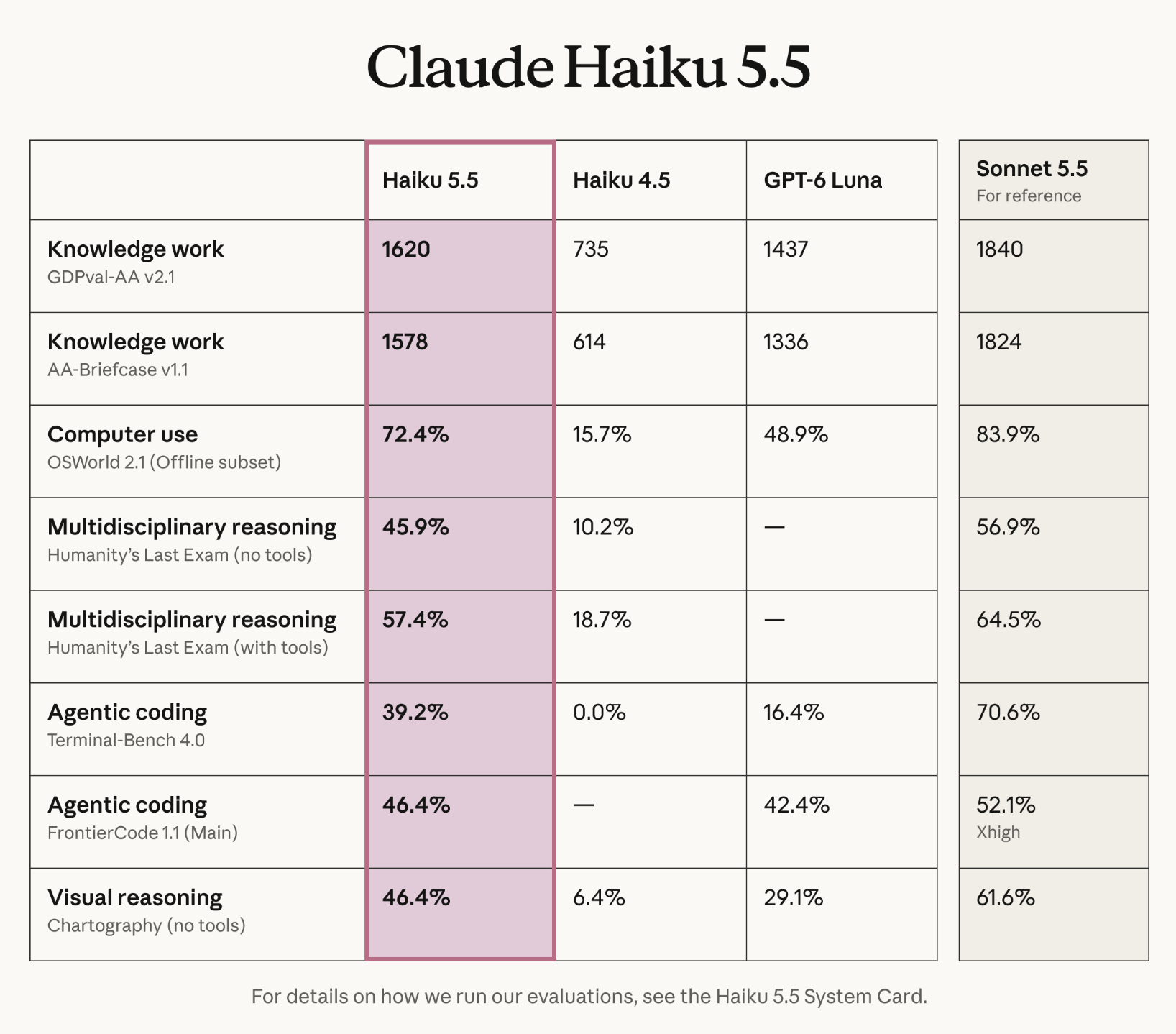
These are Anthropic’s reported figures, not independent ones — but they are striking even with that caveat. On the GDPval-AA knowledge-work benchmark Haiku 5.5 scores 1620, ahead of OpenAI’s flagship GPT-6 Luna at 1437. On computer use (OSWorld), it jumps from Haiku 4.5’s 15.7% to 72.4% — nearly five times better than its predecessor and well clear of Luna’s 48.9%. Anthropic’s larger Sonnet 5.5 still leads everything, but Haiku 5.5 now covers a surprising share of that capability at a fraction of the price.
The effort dial is the genuinely new idea for a small model: Anthropic’s charts show Haiku 5.5 at maximum effort roughly matching mid-effort Sonnet 5.5 on knowledge work, at a lower cost per task. Early-access customers quoted in the announcement (Asana, HubSpot, Box, AlphaSense) report 30%+ latency reductions and benchmark bests — vendor-selected quotes, as ever, but from named engineers.
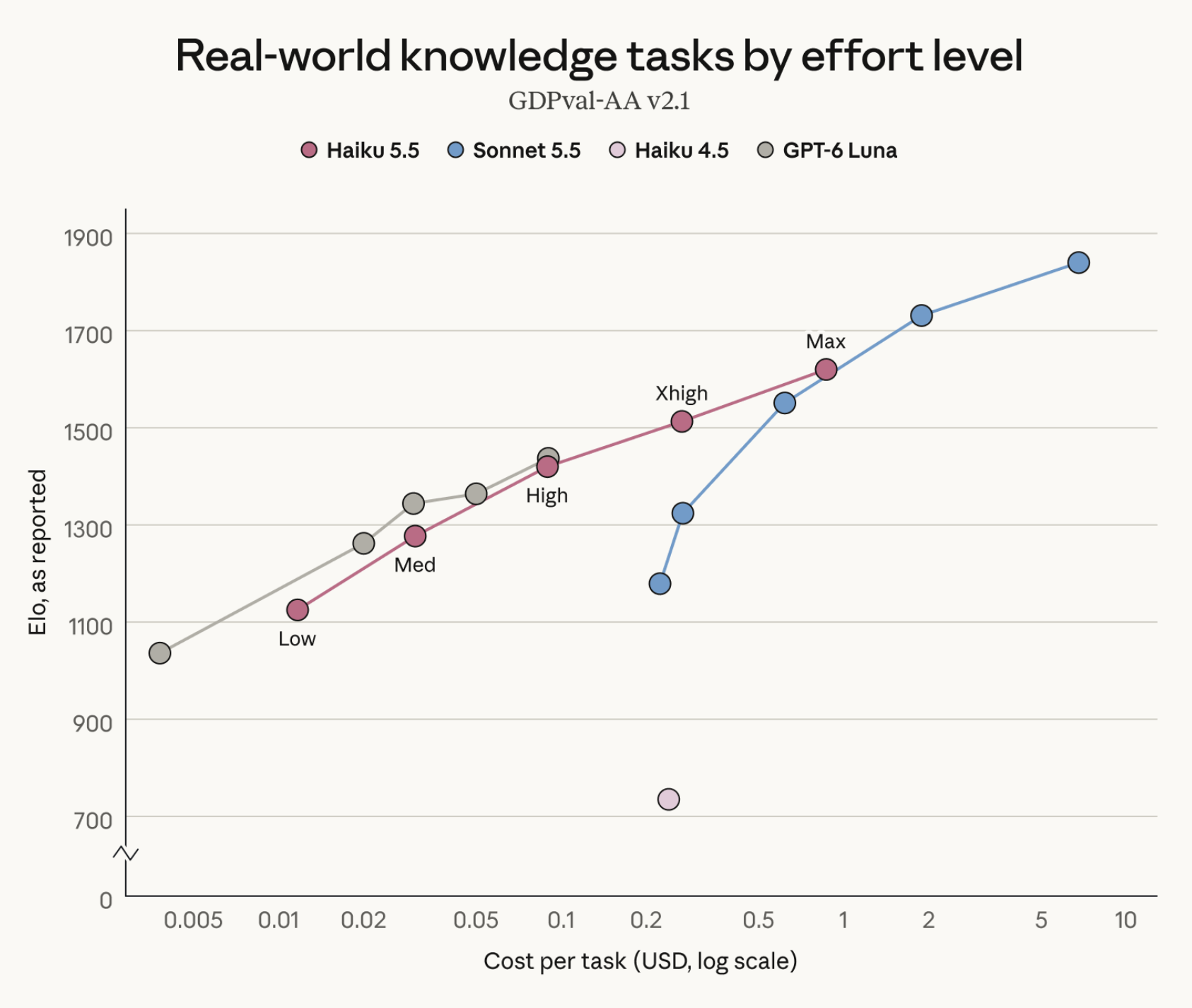
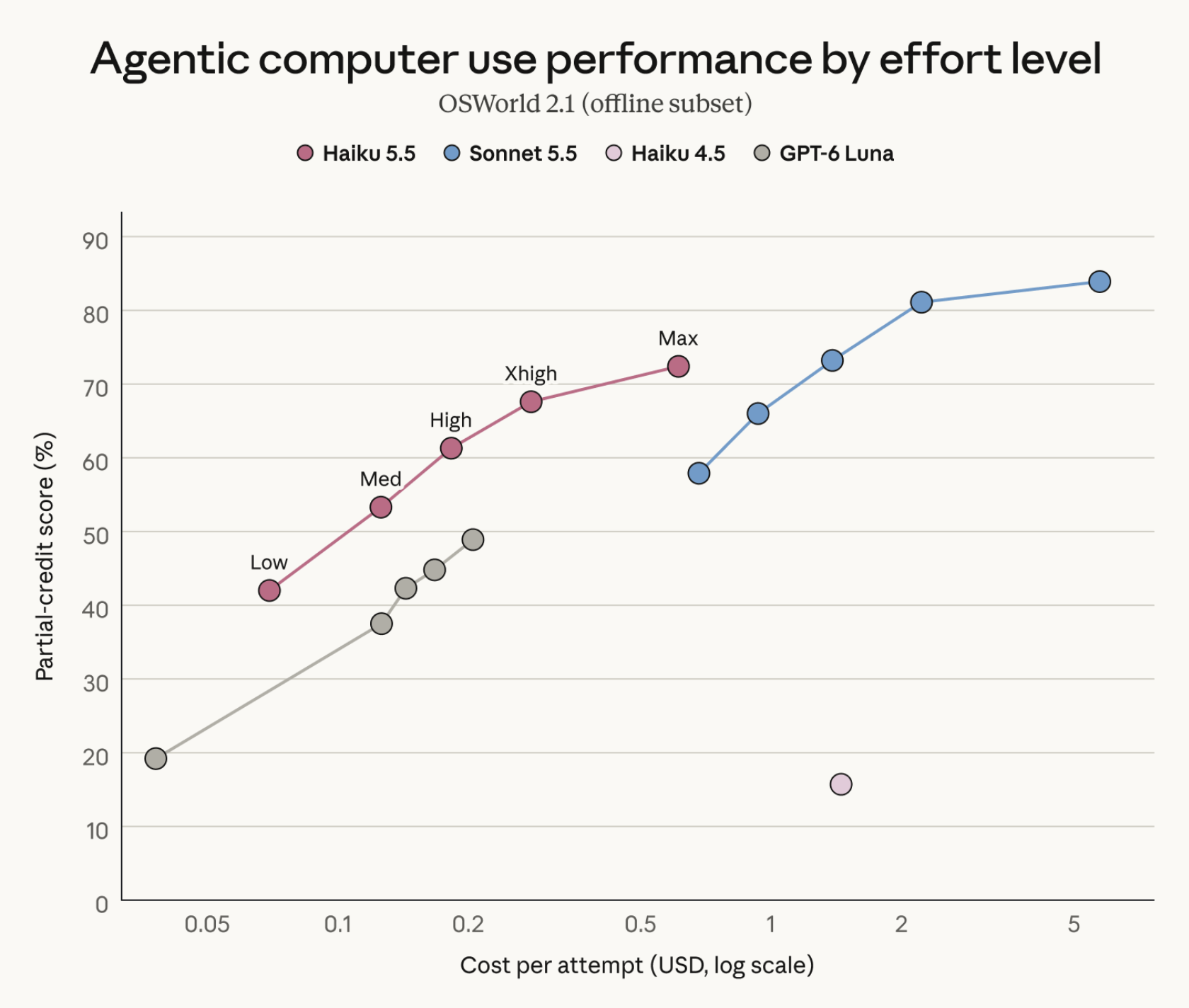
Anthropic’s effort-level charts: Haiku 5.5 (red) tracks or beats GPT-6 Luna (grey) across the cost range, with Sonnet 5.5 (blue) above both at higher cost.
Claude Haiku 5.5 pricing
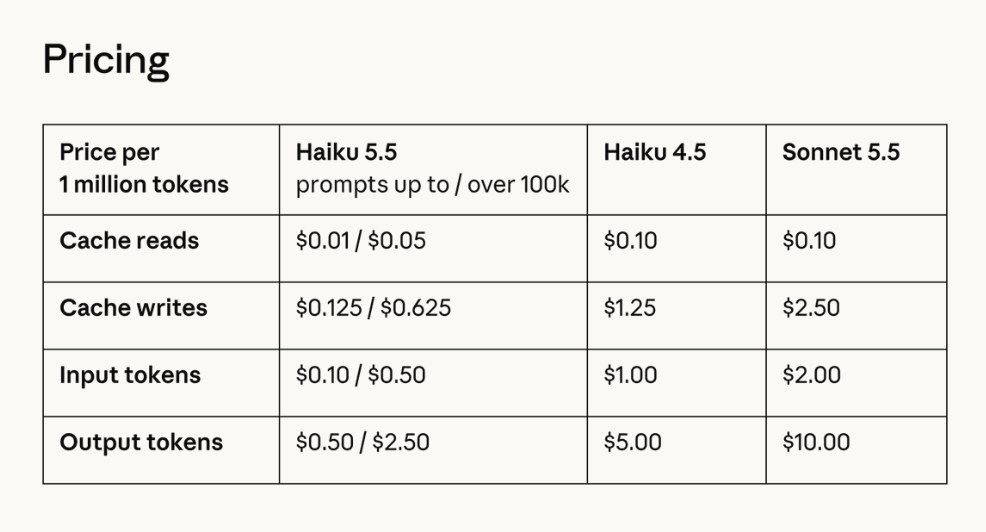
The Claude Haiku 5.5 pricing is split by prompt size — up to 100,000 tokens (which Anthropic says covered about 90% of requests to the old Haiku) and above it. Input costs $0.10/$0.50 per million tokens, output $0.50/$2.50, against a flat $1.00 in and $5.00 out for Haiku 4.5. One honest footnote from Anthropic worth repeating: Haiku 5.5 uses a new tokenizer that consumes slightly more tokens per task, which is already baked into the ~75% average saving. And “fastest model to date” carries its own asterisk — Anthropic’s Opus models in Fast Mode are still quicker.
The buried news: free monthly API credits for Max and Team subscribers
Two further changes to Claude Haiku 5.5 arrived in the same announcement, and one of them matters to people who never touch the API today. First, Sonnet 5.5’s cache reads are now half price ($0.10 per million tokens), which Anthropic says cuts the cost of most agentic work on Sonnet by about 20%. Second — the quietly significant one — Claude Max and Team subscribers are getting a monthly API credit: $100 a month on Max 5x, $200 on Max 20x, and up to $500 pooled for Team plans. If you already pay for Claude, you are about to be handed a budget to build things with it — and Haiku 5.5’s pricing means that budget goes a long way.
What Claude Haiku 5.5 means in practice
For most readers of this site, Claude Haiku 5.5 is a model you will meet indirectly: it is built for the high-volume work inside AI products — summaries, classification, live chat support, browser agents — so the tools you use should get faster and cheaper to run. Whether vendors pass that saving on is the part worth watching, and I will. For context on the Claude family itself, see my Claude AI review and the Sonnet 5.5 launch coverage. In the spirit of this site’s transparency: WhatAITools is itself run day-to-day with Claude’s help, so the Claude family gets tested here whether I plan it or not — and if the Max API credits turn out to be useful for readers in practice, that will get covered too.
Leave a Reply