
AI voice tools turn text into natural-sounding speech — and increasingly hold a conversation on the phone. This category covers two related jobs: voiceover and text-to-speech for videos, podcasts, e-learning and audiobooks, and AI voice agents that answer calls as a receptionist, call centre agent, recruiter or sales rep. We review both sides on real tasks, testing how human the voices actually sound, how well cloning works, what the licensing lets you do commercially, and where a synthetic voice still gives itself away. Reviewed hands-on by James Huntington.
-
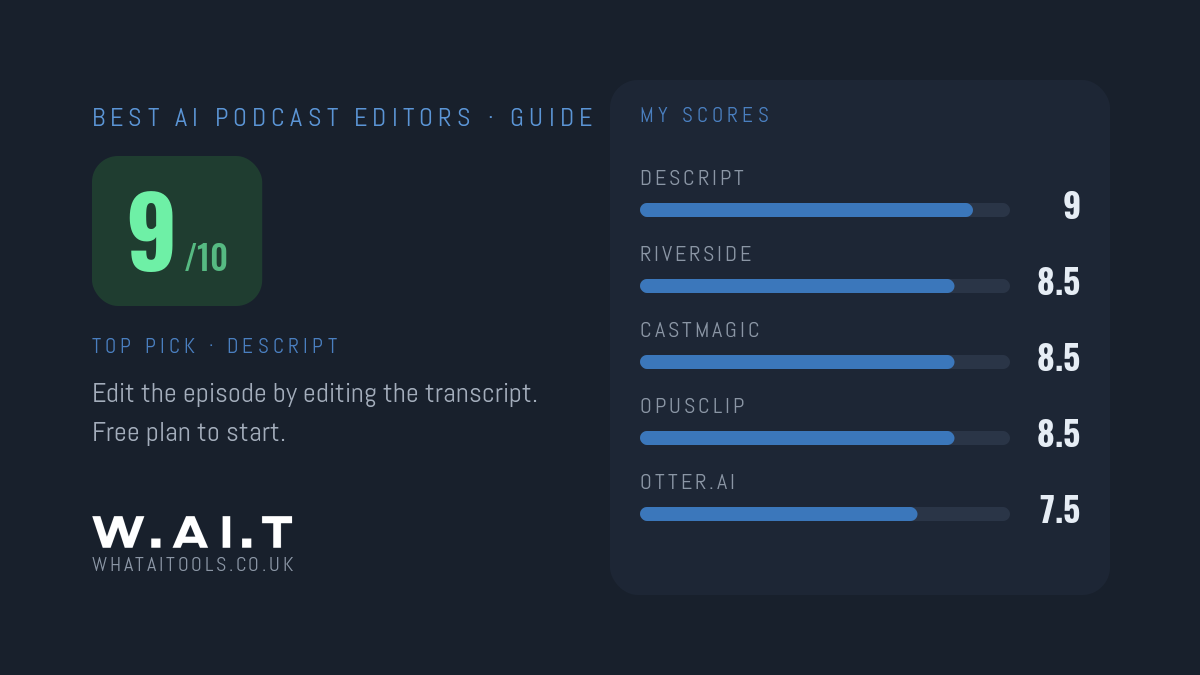
the best AI podcast editor is Descript (9/10), which lets you edit audio and video by editing the transcript. Pair it with Riverside (8.5/10) if you record remote guests, and add Castmagic (8.5/10) if you want show notes, posts and newsletters written from each episode.
-
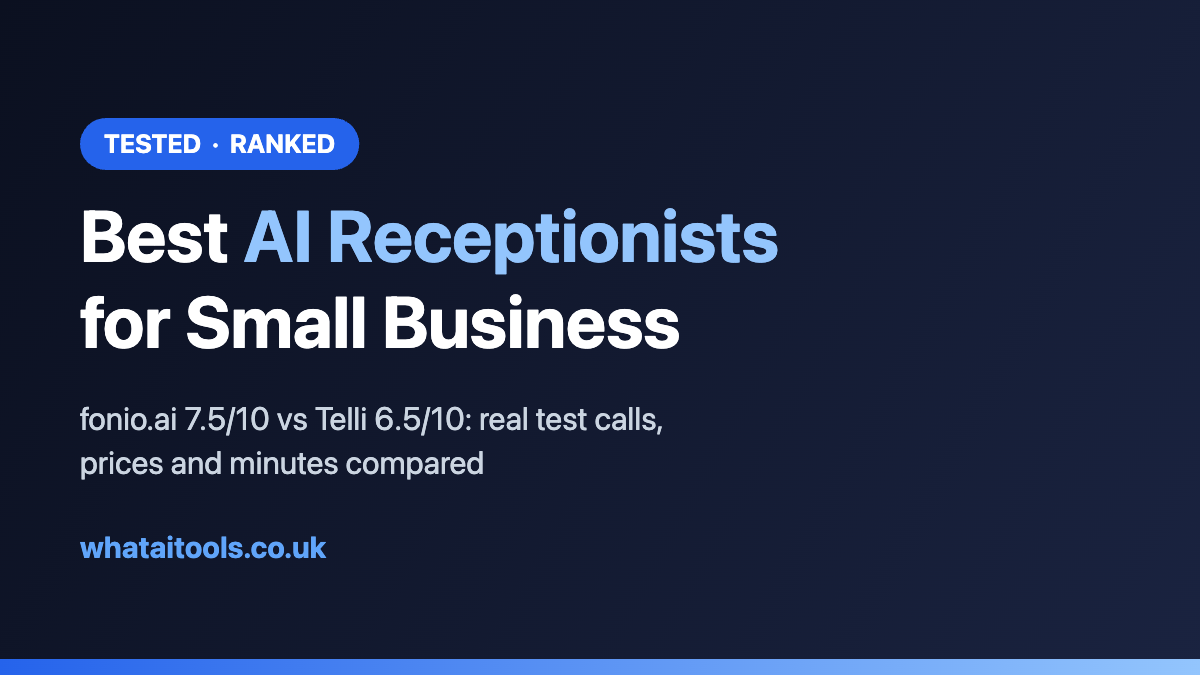
The best AI receptionists for small businesses, ranked from my own test calls: fonio.ai (7.5/10) and Telli (6.5/10), with prices, minutes and trials compared — plus the AI phone agents I ruled out and why.
-

My Telli AI review: I built a Telli phone agent for WhatAITools and took test calls from it — it captured every detail and handled interruptions well, but sounds slightly robotic, and I would not pay £80 a month for it. I scored it 6.5/10.
-
ElevenLabs vs Murf AI: ElevenLabs stayed focused on voice quality while Murf moved towards voice agents. I compare realism, cloning and pricing — both scored 8.5/10.
-
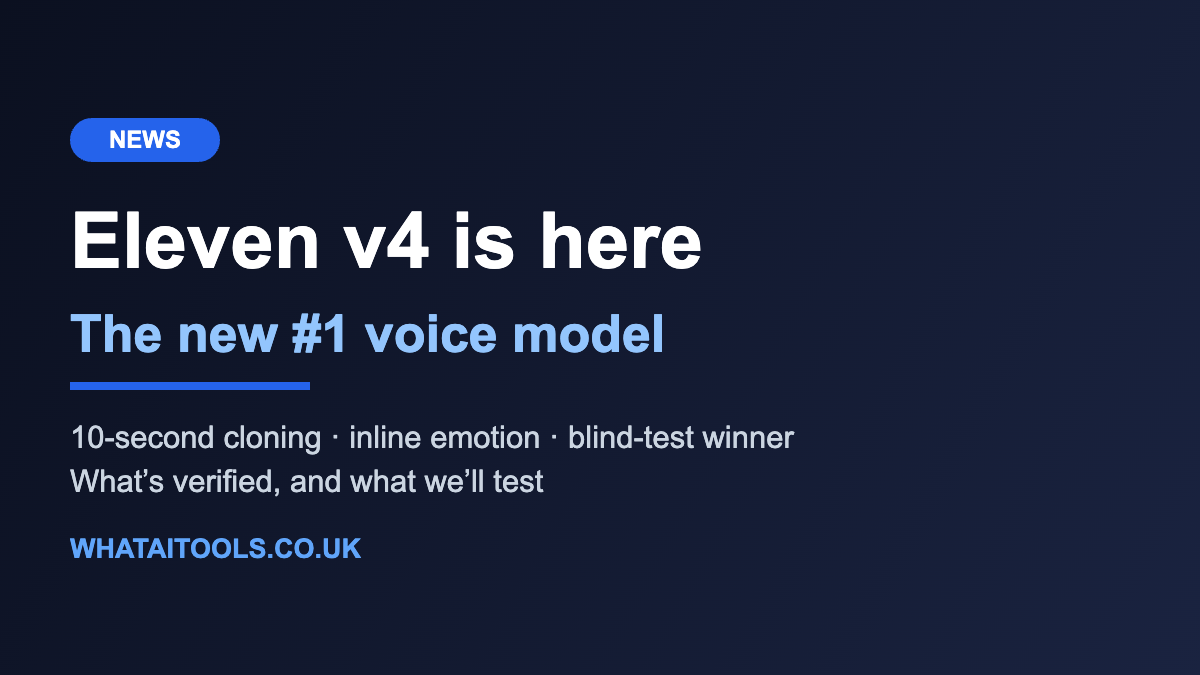
ElevenLabs launches Eleven v4 and v4 Turbo: 10-second voice cloning, inline emotion control and a #1 in independent blind tests. What’s claimed, what’s verified, and what I’ll test.
-

My Murf AI review: voiceovers good enough for published e-learning and marketing video, with controls to direct the performance — cloning needs the Business plan. I scored it 8.5/10.