
AI writing tools help you draft, edit and rewrite content faster, from letters, emails and blog posts to marketing copy, novels and academic work. I review paraphrasers, long-form generators, grammar checkers and AI writing assistants, testing each one on real writing jobs rather than demo prompts. Every review covers what the free tier actually gives you, where output needs human editing, and who the tool suits. For my ranking, including the best AI for letters and emails in the UK, see my best AI writing tools guide.
-
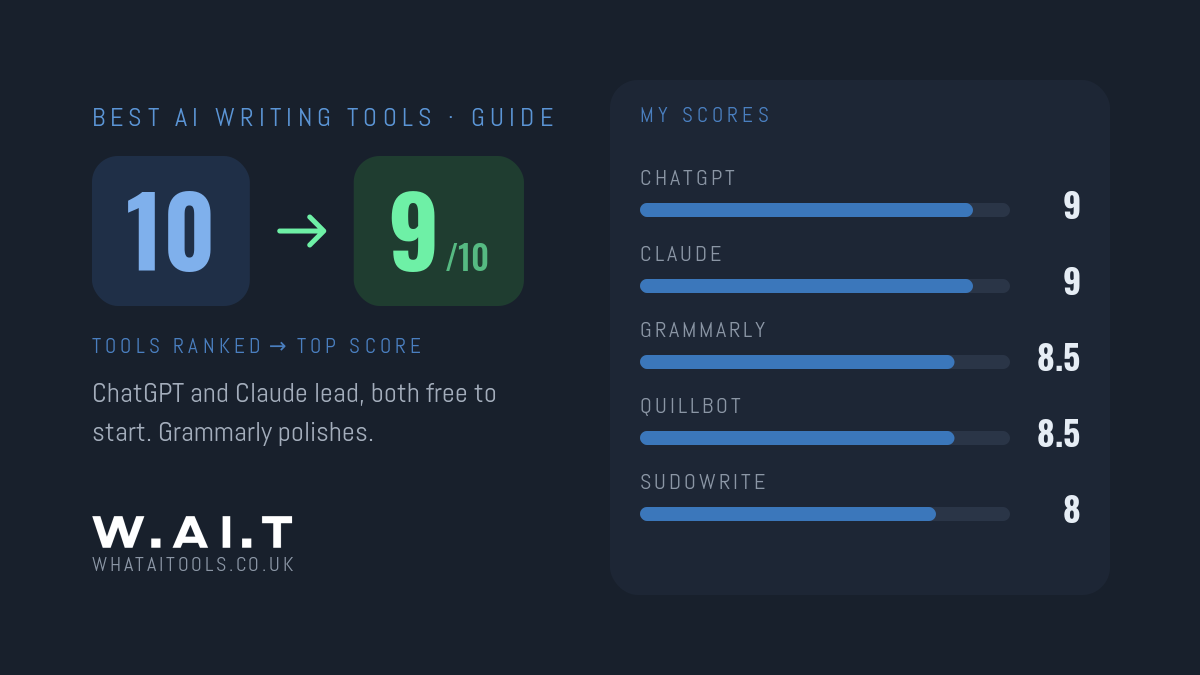
for most people the best AI writing tool is ChatGPT or Claude (both 9/10), and both have free plans. Claude writes the more natural prose; ChatGPT does more besides writing. To polish writing you’ve done yourself, use Grammarly or QuillBot (both 8.5/10). Novelists should look at Sudowrite (8/10).
-
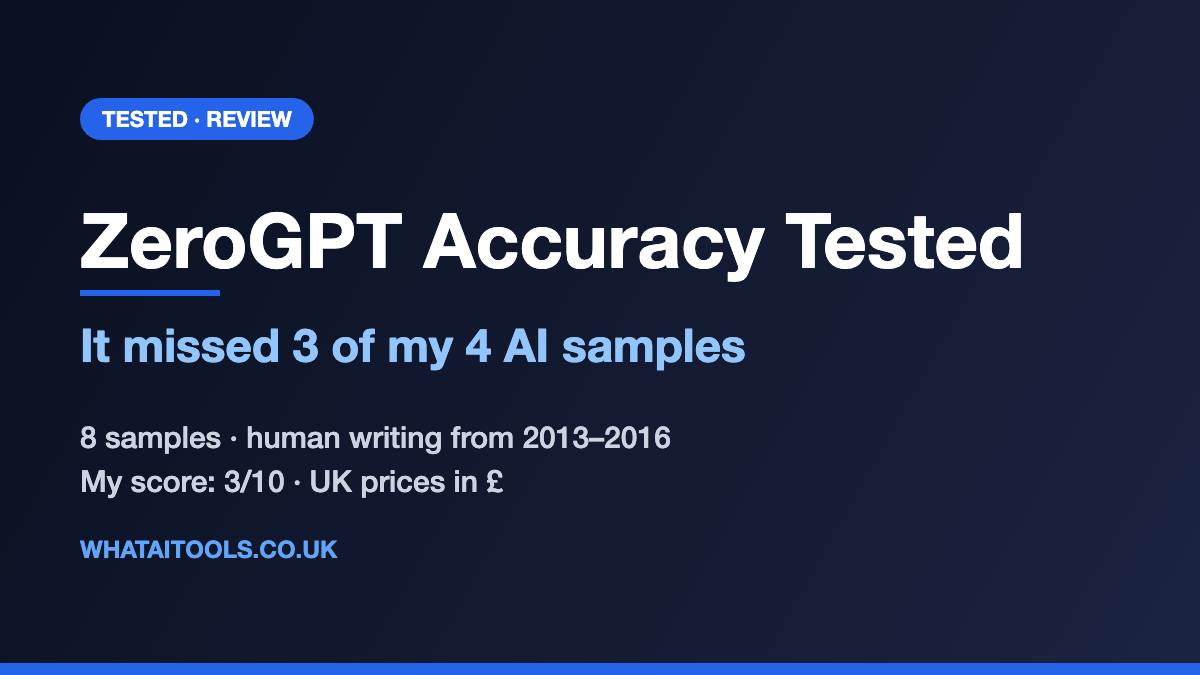
I put ZeroGPT accuracy to the test because ZeroGPT says its detector is 98.4% accurate, with a false positive rate under 1%. In this ZeroGPT review I check both claims against my own writing and against AI writing, and list ZeroGPT’s prices in pounds. Last updated: 20 October 2026. I checked the prices below on…
-
Grammarly vs QuillBot: Grammarly corrects what’s wrong, QuillBot rewrites what’s clumsy. Both scored 8.5/10 — here’s which one you actually need.
-
My QuillBot review: best-in-class paraphrasing that reads naturally rather than mechanically, and a free plan that does real work. I scored it 8.5/10.
-
My Castmagic review: one upload produces show notes, summaries, social posts and quotes with little cleanup — but there’s no free plan. I scored it 8.5/10.
-
Novelcrafter vs Sudowrite: a full novel-management workspace versus an AI prose assistant — both scored 8/10 for fiction writers, for different jobs.